Author: ashish

  • Stop Blaming GST: Your Real Problem Is Deeper

    Stop Blaming GST: Your Real Problem Is Deeper

    Table of Contents

    GST has turned out to be the most convenient target of monetary shortcomings. Margin are narrowing? There is excessive GST. Money flow out of shape? You can blame GST returns and delays in refund. Mastering the compliance seems like a burden? Something is wrong with the system. The reality, however, is more difficult to digest: it is not the tax regime that is the problem, it is the inability to engage in sound financial planning in most small and mid-sized enterprises.

    The feeling that accompanies GST might be a never-ending frustration and irritation, but most of the time, it might be only a superficial pain. The more fundamental problem is that there is no long term financial planning, analysis of cash flow and optimization of margins. It is at this point that CFO services for small business can quietly change everything, not by working on returns but rather by redefining the way you understand money.

    Its Not the Taxes-It is the Turbulence

    Indeed, Indian taxation is complicated. However, there are thousands of companies with this structure and prosper. It is not that they have improved access to government portals but improved systems. Majority of small businesses are reactive in their operations. Instead of next quarters expenses, they look at last month bank balance. They do not worry about the receivables until they are past the due date. They reduce their prices frantically instead of pricing their goods more smartly.

    The so-called GST problem is usually lack of forecasting. Entrepreneurs never pay much attention to working capital cycle. They are oblivious to how horribly there is a mismatch between payment terms vendors receive and customer payment cycles. This makes them anxious and keeps them in a scramble state, trying to find short term solutions, and neglecting larger structural problems that are bleeding the business.

    Why CFO Services for Small Business are More than Compliance

    The fact that the role of CFOs is misperceived as expensive accountants serves as a serious blow to smaller companies in India. Chartered accountant may do your filings and have your books in compliance. That is where their job stops. CFO, in turn, plays the role of navigator of your financial future e.g. sees the blind spots, questions assumptions, models various growth scenarios.

    An example would be a manufacturing unit with the problem of inconsistent cash flows even as the sales increase. The founders believe that GST refunds are the culprets. However, a savvy CFO may discover that a lousy product line is causing cash drainage. Or that stock is building up because of bad forecasting. Or that vendor contracts were reducing margins to a larger extent than the taxes could ever do. The CFO stops the financial spillage by identifying the actual cause.

    Of course, at this time of post-pandemic volatility, inflation and late client payments, Indian businesses require more than compliance, they require certainty. And that is where the use of CFO services providing the strategic layer to a small business becomes non-negotiable. It is all about being able to see the entire financial picture and not only those bits that the government requires.

    GST is not the Enemy. Mismanagement Is

    Consider an example of a medium size textile exporter in Gujarat. The promoters believed that their financial plight was caused by the poor refunds of GST. They had good sales and last year their returns had been maintained by their chartered accountant. However, the company had lost money during the previous six consecutive quarters. The findings were however different when a temporary CFO was hired.

    A significant part of their orders was undermined with the old contracts that were signed in the times of pandemic. They had experienced increasing costs of raw materials yet they were not changing their prices. They were paying suppliers ahead of time yet their largest client was paying 45 days late. And their dependence on GST rebates were masking an even bigger operational inefficiency. In the span of several months of renegotiating contracts, changing payment terms, and re-evaluating the costs base, their cash flow stabilized – despite the delays of GST refund timelines not having changed.

    This is not an exception. It is a trend in all the cities of India, whether the handmade products parks in Jaipur or service companies in Mumbai. It seems like a problem created by the government but is almost always found on awful internal systems.

    The Real Competitive Advantage is Financial Maturity

    Compliance is only point one in the modern business environment. To grow, we need knowledge, vision and self-control. Most small business people think that they should be at a certain size before they qualify to get advanced financial assistance. However it is not so. The sooner you introduce organized thinking in your set up, the higher the chance of surviving the next phase of market vagueness.

    With the advent of remote work solutions and flex consulting systems, even expanding companies can now achieve high-level financial management, without having to recruit full-time executives. That is the silent power of new-style CFO services for small business; they have the secret skills at your behest, without the additional expense.

    Final Thoughts

    It is tempting to point an accusing finger to GST. It is more difficult to challenge your own systems. However, when it comes to sustainable growth, you must moved beyond complaint talk, and focus on how to improve the situation. The cost of doing business may include taxes, but bad strategy is not a requirement. That way, instead of blaming the government you have to look yourself in the mirror and say, is it GST… or is it a blind spot in your financial engine?


  • Burn Rate Lies: Why Most Founders Miscalculate Survival Time

    Burn Rate Lies: Why Most Founders Miscalculate Survival Time

    Table of Contents

    In India, startups are typically in survival mode, calculating their survival to their next capital raise in-months, in the so-called runway calculation that provides a rough idea of survival time before the lights must turn off. However, this figure is widely a false illusion. Founders go into meetings with investors believing they had 12 months of runway only to find themselves with a cash shortage in six months.

    It is not only a mistake in finances, but also a mental trap. And though most founders tend to work based on estimates and gut feel, an experienced CA for startups may end up showing how flimsy those assumptions can be.

    Why Runway Math Does Not Often Equals Reality

    On the surface, it is easy to compute runway, which is available cash divided by your average monthly costs. That is, of course, given that you have ready access to cash; that there are no surprises to the cost side of the business; and that nothing unpredictable happens to the business in India, which happens to be untrue, most of the time.

    A typical area of blindness is how founders treat once off costs. It is a fact that they are not usually one-time. Attorney fees, incorporation fees, compliance consulting services – these are some of those which re-occur or grow with business. Other lurking danger is deferred liabilities. These obligations can be anything between GST and TDS dues to delayed payments to vendors and will not be reflected in your current burn but will have to be paid later which, in most cases, means immediately.

    The assumptions in revenues also skew the situation. An invoice is not necessarily a cash item. Most entrepreneurs include estimated sales into their cushion, without realizing that even a delay or lost client may eliminate the cushion overnight. Then there are all the hidden day to day costs, the little software subscriptions, the marketing retainers, or the gotchas that always seem to be hidden in there that never get in the official burn estimate but nibble away at the cash nonetheless.

    The effect is the perilously false feeling of safety. Key decisions like hiring, advertising outflow, product releases, are being taken on wrong figures. The founders spend time trying to improve their metrics before they raise money, not realizing that the runway has been cut by unseen background fires.

    The Importance of a CA for Startups beyond Bookkeeper

    The majority of founders see financial specialists as backward-looking individuals, i.e., those who sum up the costs incurred and submit reports. A keen CA to start-ups, however, has much to offer. They’re forward-facing. They simulate the risks, stress the assumptions and construct the financial scenarios which founders tend to ignore.

    A CA with the startup landscape knowledge does more than crunching numbers. They are posing difficult questions. How does it affect you when your biggest customer does not pay you within sixty days? What would become of the hiring that has been scheduled in two months time? Imagine the following GST payment coincides with your departmental increase in salary?

    Founders base their decisions better with answers to such questions. They understand when to save cash, advance growth, and raise capital, not on ruled judgment but on modeled results and organized projections.

    A Grass-Roots Jolt

    Let us consider a case of a Bangalore-based SaaS startup. Theoretically, they had 1.2 crore in the bank and were expected to burn through 10 lakh a month, which made good clean twelve months of runway. However, they had failed to consider eight lakh worth of unpaid taxes, four lakh in vendor payments, and an upcoming increment in payroll. Their runway was near to six months.

    It was too late to realize. They already rented a new office and increased staffing. The only solution left in order to keep afloat involved emergency bridge funding. The founder points out that an adequate review by an expert CA in start-ups would have pushed their decisions back by months and robbed them of the panic.

    Final Thoughts

    False confidence in financial control is a widely spread and the most expensive mistake made by Indian founders. It is not the matter of money mismanagement. It is about believing imperfect statistics and making bad assessments about the pace at which things move in the start-up world.

    Clarity is the key to survival whether you are working on a newborn idea or growing rapidly. And clarity begins by an understanding that you know your burn rate is not make believe. One of your best underrated growth partners is a reliable CA for startups not because they run towards tax filing drills, but because they ensure that your numbers do not lie when it matters the most.

  • Financial Clarity Redefined: The Rise of Outsourced CFO Services

    Financial Clarity Redefined: The Rise of Outsourced CFO Services

    Table of Contents

    Organizations are on the hunt for smarter financial plans which will not entail an increment in overheads witnessed in the current dynamics of a growing global economy. The services of the Outsourced Chief Financial Officer (CFO) have turned out to be an efficient form of financial management, providing high-level financial advisory services but lacking the expense of a full-time executive. These services provide strategic advice, compliance and enhancement of the financial performances incurring cost effective operation to startups, growing businesses and even established enterprises.

    Financial forecasting and Strategic Planning

    Outsourced CFOs are very crucial in business long term planning. They assist in the outlining of financial-related goals, construct stable estimations, and form growth possibilities. These professionals use their experiences, market trends, and the current performance to come out with evidence-based strategies, which they use to align them with business objectives. This makes it possible to overcome uncertainty by the companies, to plan their investments more and make a better strategic decision about future expansion and sustainability.

    Better Cash Flow Management

    Effective management of cash flow will be stable and facilitate day to day activity. Outsourced CFO services pay attention to the inflow of money and outflow hence helping to detect liquidity shortages at an early stage. They can help to manage collections, cycle of payments, receivables and streamline operation expenses. This achieves a more certain cash cycle and lesser financial burden, more freedom to spend on innovation, talent and infrastructure.

    Fundraising Support and Acquisitions of Investor Communication

    Financial transparency and clarity rely on the confidence of investors. Outsourced CFO is in charge of such an interface, creating professional financial statements, business models and investor reports. When it comes to organizing a funding round or answering questions to investors, their assistance will make that process credible and accurate. They are also involved in negotiations, term sheets assessments and due diligence in order to achieve positive funding results.

    Tax Administration and Regulatory Compliance

    The ever-changing regulation and laws involving taxation are confusing. Outsourced CFOs guarantee that statutory requirements like taxations, policies of corporate governance, and financial audits are followed in time. They also recommend tax planning strategies that are within the legal frame as well as optimizing efficiency. They are also vigilant in avoiding fines and smooth running of business according to the regional and national regulations.

    Tailor-made Financial Reporting and Analysis

    To grow one needs to understand financial performance. Outsourced CFOs produce custom reports and not just profit and loss reports. These statements include such important indicators as gross margin, burn rate, and EBITDA, etc. Through periodic analysis, businesses discover more about the cost structures, drivers of profitability within the business and business inefficiencies. This allows making appropriate changes of strategy and budget allocations in a timely manner.

    Resource dexterity and Cost-effectiveness.

    One of the benefits of outsourcing is the ability to cut overheads and still maintain the same quality. Outsourced CFO service can provide a company with a high-quality service of CFO, but the salaries and benefits of a household CFO are not covered. These practitioners detect wastages in spending and propose new ways of doing things in streamlining operations. With more efficient reallocation of resources, corporations are able to concentrate on core capabilities as well as competitive differentiation.

    Technology and Process Automation

    New finance is rather dependent on technology to work fast and precisely. Outsourced CFOs also enable the use of financial software and cloud-based tools as well as automation systems to make them part of the routine. This will lead to faster reconciliations, real-time financial tracking and reduced errors in entering by manual errors. Businesses with digital solutions achieve the agility, scale, and flexibility to change rapidly in response to market dynamics or changing internal requirements.

    Exit Planning and Valuation Experience

    Financial readiness is very important when doing mergers, acquisitions or when a company is going to be listed. Outsourced CFO services contribute to exit strategy planning by making the proper valuations and coordinating of due diligence, and regulations. They guarantee that all financial records are investor-ready, transparent and arranged. Such readiness makes the company more credible and in most cases, the outcome of the exit becomes substantially more successful.

    Growth Supportability of Business

    Services of outsourced CFO are also flexible by definition, and they increase and decrease according to business requirements. Financial advice is developed depending on the situation whether a firm is experiencing early-stage doubt or is in a high-growth phase. Outsourced CFOs are effective because one can easily change the volume of work without recruiting new employees. They are scalable hence there is uniform financial control, regardless of the size and phase of the company.

    Conclusion

    Outsourced CFO services is changing the face of financial management by providing strategic services, compliance assistance and cost effectiveness. They act as an effective expansion of the internal teams to provide outcomes that engender profitability and business lucidity. What outsourced financial leadership can do in the modern competitive and unpredictable landscape is that it helps the business undergo an evolution of being prepared to move swiftly, continuously learn, and be in a place well setup to prevail over a long-period of time.


  • Unlocking Financial Success: Comprehensive CFO Services for Indian Startups

    Unlocking Financial Success: Comprehensive CFO Services for Indian Startups

    Table of Contents

    The business environment of startups in India is dynamic as it is characterized by intense competition, complexity of regulations and financial changes. In order to toggle through this terrain, good financial strategy and implementation is necessary. Chief Financial Officer (CFO) services provide startups with professional advice related to the management of available resources, improving financially, and maintaining compliance. Such services enable young-stage businesses to obtain skilled financial guidance at high levels without having to hire a full time executive at a great cost, enabling businesses to grow and scale effectively.

    Growth Strategic Financial Planning

    An intensively devised financial plan is significant towards the survival of a startup. CFO services help in implementation of a thorough financial roadmap that is aligned to the business objectives. This includes the revenue forecasting, estimating costs, capital planning and financial risks assessment. It assists founders in making an informed expansion, product launching or entering new market decisions and having financial discipline at any point of the business lifecycle.

    Cash Flow and Budgeting

    Operation stability requires proper management of cash flow. The work of CFO professionals consists in controlling inflows and outflows of cash, finding gaps in funding and recommending appropriate actions. Budgeting procedures become simpler so as to distribute resources effectively and spend less unwarranted money. This way startups have been able to ensure that they can have liquidity but that they are not experiencing any financial distress which is very essential especially in the early stages when the overheads are probably higher than growth.

    Fundraising and Investor relation support

    The startups normally depend on external funding to grow. A CFO service is very significant in the preparation of a financial record, business appraisals, and pitch decks that cater to investors. Such professionals get involved with venture capitalists, angel investors, and financial institutions and are transparent and credible. They are knowledgeable on how to obtain funding on more favorable terms besides controlling expectations by periodical financial reporting and performance analysis.

    Risk Mitigation and regulatory Compliance

    One of the aspects non-suggestible of doing business in India follows Indian financial and tax laws. CFOs give accurate record keeping and keep good compliances in terms of statutory compliances on GST, income tax, and corporate governance. Further, risk management assessments are conducted to determine possible risks like financial frauds, market fluctuations or fluctuations in policies. This level of vigilance reduces the liabilities and protects the reputation of the startup.

    Performance Monitoring and Financial Reporting

    Monitoring of finances is important to the long term success. Some of the services that would be provided by CFOs are customized design of financial reports and headers that can be used to give real-time information on important markers which include profit margins, the burn rate, and the return on investment. These tools will enable decision-makers to depict trends, to compare the actual performance with the forecasts, and to take corrective measures in a timely manner, thus guaranteeing a continuous improvement.


    Integration and Automation in Technology

    CFOs in the contemporary world are using their financial technologies in order to boost efficiency and accuracy. Financial system integrates accounting software, cloud-based dashboards and automatic reconciliation software. These technologies lower labor errors, accelerate the processing and increase the availability of the data. In the case of startups, it translates to lower overhead expenses, improved scalability, and improved support of digital transformation programs.

    Resources and Cost Optimization

    Most startups are aiming to become profitable, so it is essential to ensure that operating costs will be kept at a reasonable level. CFO services also perform cost-benefit analysis to spot unnecessary expenditure and propose what can be optimized. The strategies can be the renewal of the vendor contracts, outsourcing non-core activities or inventory control. When the resources are used efficiently, startups can use them in other areas with high impact like product development and acquiring customers.

    Valuation-Exit Strategy and Advisory

    An exit strategy turns out to be one of the strategic interests considered as startups develop. CFO services aid in the financial preparation regardless of whether they are in the form of mergers, acquisition or public offering. Proper business valuation, due diligence assistance and audit of compliances make the transfer very easy. The proactive nature of it allows to maximize the returns of both founders and investors so that the process of creating a startup is completed successfully.

    Conclusion

    CFO services for startups in India have become an important resource to the startup which provides a combination of foresight, financial management, and operational management. The services can fill the gap between entrepreneurial vision and financial implementation, and the startups then facilitate responsible and competitive growth. Startups have the ability to not only survive in the competitive Indian scene but succeed in creating long term sustainable success with the right financial guidance.

  • IMS is Not Mandatory – Or Is It?

    IMS is Not Mandatory – Or Is It?

    Table of Contents

    Reassessing the Legal Fiction and Operational Compulsion of the Invoice Management System under GST. While IMS remains voluntary de jure, its de facto implementation leaves taxpayers, especially MSMEs, with no real choice.

    The Invoice Management System (IMS) was initially unveiled as a voluntary tool aimed at simplifying GST compliance by offering real-time reconciliation between supplier and recipient invoices. At the time of launch, the GSTN and the government promoted IMS as an optional IT-based interface to facilitate smoother Input Tax Credit (ITC) validation and to help identify mismatches. However, in practice, what was announced as an optional mechanism has rapidly morphed into a systemic compulsion for businesses across sectors.

    While there is no express statutory mandate for IMS as of April 2025 under the CGST Act or Rules, the GST portal has already operationalised IMS as an effective prerequisite for GSTR-2B generation. Whether an invoice is accepted, rejected, or left unacted upon in IMS, it has a direct impact on what gets auto-populated in GSTR-2B, and consequently, in the GSTR-3B. The architecture of the portal leaves no realistic alternative for taxpayers other than to engage with IMS on a regular basis. In essence, businesses are now compelled to act not because the law mandates it, but because the system is designed to make engagement unavoidable.

    Legal Position and the Legislative Void

    Currently, IMS has no binding legal backing in the CGST framework. Yet, the system functions as though it is already mandatory. The 55th GST Council Meeting had acknowledged this disconnect and proposed to close the legislative gap. Even though these changes are likely to take another 6 to 8 months, the functional mandate of IMS has already taken hold. Since the GSTR-2B is now generated based on accepted or deemed-accepted invoices in IMS, and no changes can be made once GSTR-3B is filed, the operational compulsion has overtaken the legislative process.

    The Functional Shift and Its Systemic Implications

    IMS has fundamentally changed the way taxpayers approach GST reconciliation. Traditionally, businesses used internal purchase registers to perform ITC matching after filing. Now, they are forced to reconcile invoices in real time, with specific actions required before GSTR-2B generation. This shift necessitates the setting up of internal SOPs across accounts, tax, and IT teams. Real-time validation, daily or weekly reconciliation schedules, and automated tools have become essential.

    A single incorrect click can have irreversible consequences. Once an invoice is rejected in IMS, it cannot be reinstated. Credit notes present a particularly harsh challenge: recipients cannot mark them as pending. If rejected, the credit note increases the supplier’s liability, even if the associated invoice has been rejected too.

    Moreover, IMS provides no accommodation for reverse charge entries, nor does it offer any remedy for missing invoices. The planned hard-locking of GSTR-3B will further eliminate any post-facto correction flexibility. It is evident that the government is using technological architecture to enforce compliance expectations that do not yet have legislative standing.

    From Optional Tool to Government’s Purchase Register

    IMS has become, in effect, the government’s version of the taxpayer’s purchase ledger. What is accepted in IMS, minus ITC reversals and plus RCM, is what the authorities will rely on during audits and enforcement. This has implications not just for compliance, but also for record-keeping and internal controls. Businesses must now treat IMS data as the single source of truth in their GST universe.

    Commercial Consequences and Contractual Overhauls

    The irreversible nature of IMS decisions necessitates a rethinking of business contracts and commercial arrangements. For instance, supplier agreements may need to link payment terms or refund eligibility to confirmation of invoice acceptance or ITC reversals in IMS. Internal processes must ensure that IMS actions are validated before GSTR-3B is filed, as post-filing corrections are no longer an option.

    MSMEs and the Cost of Compliance

    While large enterprises may have the infrastructure and resources to transition into this new model, Micro, Small and Medium Enterprises (MSMEs) are facing significant challenges. A recent report by CNBC-TV18 brings to light growing concerns from the India SME Forum, which estimates an additional annual compliance cost of Rs. 1.5 lakh per MSME due to the mandatory operational use of IMS. The  report calls for a phased implementation strategy, similar to e-invoicing, to allow time for system upgrades and personnel training.

    The report also highlights several key hurdles faced by smaller enterprises:

    • Limited preparation time, with GSTN issuing advisories on IMS rollout barely a month in advance.
    • Lack of APIs, bulk upload utilities, and offline reconciliation tools.
    • Mandated immediate action on credit notes, which cannot be deferred or kept pending.
    • Hard caps on download limits (e.g., only 500 documents viewable at a time).

    In the report it was estimated that over 75% of MSMEs are not technologically equipped to comply, while 95% say they need more time and support to integrate IMS into their systems. As a result, the risk of losing legitimate ITC claims has significantly increased, threatening to strain their cash flows and overall viability.

    Moreover, a cascading compliance effect is now in motion. Since large corporations are often better equipped to handle the challenges posed by IMS and have already adopted it in their systems, their suppliers—most of whom are MSMEs—are effectively left with no choice but to follow suit. When recipients rely on IMS to validate and claim ITC, any non-compliance or inaction by the MSME supplier directly threatens the commercial relationship. The chain reaction is such that if the MSME ignores IMS, it does so at its own peril, risking not only ITC rejections but also long-term business prospects.

    Conclusion: The Future is Inevitable, But the Law Must Catch Up

    The GST IMS regime is a classic case where systemic design has outpaced statutory mandate. Taxpayers are being forced to comply with a digital infrastructure that behaves as if the law has already been changed. While it may be prudent for businesses to treat IMS as mandatory today, the government must urgently bridge the legal gap to ensure that compliance burdens are matched by legislative clarity and procedural fairness.

    In the end, IMS is no longer merely an invoice management tool. It is a policy instrument, a compliance regulator, and a risk engine—all rolled into one. Its future as a statutory requirement may be inevitable, but its present as a functional necessity is already here. Those who ignore IMS do so not at their legal peril, but at significant operational and financial risk.

    The only question that remains: If IMS is not mandatory, why does it feel like it already is?

  • Tax Compliance or Tax Terrorism? The Unjust Burden of Circular 212/6/2024

    Tax Compliance or Tax Terrorism? The Unjust Burden of Circular 212/6/2024

    Table of Contents

    Introduction

    Good intention and poor implementation has been the story of GST, take for example Circular No. 212/6/2024-GST, dated June 26, 2024, which has sparked widespread concern among businesses due to its stringent compliance requirements, particularly regarding credit notes and Input Tax Credit (ITC) reversals.

    The circular mandates suppliers to obtain Chartered Accountant (CA) / Cost Accountant (CMA) certificates confirming ITC reversals for credit notes exceeding ₹5 lakh and self-certifications from recipients for smaller amounts. While the stated intent is to prevent revenue leakages, this compliance burden has raised significant legal and operational issues, exacerbated by its retrospective effect.

    The recent Delhi High Court ruling in JSW Steel Ltd. v. Directorate General of GST Intelligence has acknowledged these concerns, particularly in relation to the disproportionate burden on businesses.

    Key Observations from the Delhi High Court Judgment

    The Delhi High Court, in its order dated October 1, 2024, JSW Steel Ltd. vs. Directorate General of GST Intelligence [2024] 168 taxmann.com 16 (Delhi)/[2025] 92 GSTL 530 (Delhi)[01-10-2024] examined the validity of Circular 212/6/2024 and the corresponding Show Cause Notice (SCN) dated August 2, 2024, which sought to enforce these compliance requirements retrospectively for transactions from 2017-18 onwards. The court took note of several critical concerns raised by the petitioner. It observed that requiring businesses to procure CA/CMA certificates for every credit note and supply transaction from 2017-18 onwards is impractical and excessively burdensome.

    Acknowledging that no real-time verification mechanism exists on the GST portal, the court recognized that enforcing compliance without adequate digital infrastructure would lead to litigation and uncertainty. The court questioned the retrospective applicability of the circular, noting that businesses had legitimately relied on past tax provisions and cannot now be penalized for non-compliance with requirements introduced in 2024.

    The court specifically stayed proceedings on the issues of ITC reversals related to discounts under Section 15(3)(b) and guarantee commissions and the applicability of service tax liabilities. While allowing the tax authorities to continue proceedings on other aspects of the SCN, the court emphasized the need for further judicial scrutiny on these issues.

    Recent Proposed Amendment to Section 34(2) and Its Implications

    While the nature of the circular is clarificatory, implying that it would have retrospective effect, the proposed amendment in law would only be prospective in nature. This distinction is critical as it highlights the inconsistency in the government’s approach. The Union Budget 2025 has introduced a significant amendment to Section 34(2) of the CGST Act, further tightening compliance requirements related to credit notes.

    Previously, suppliers could issue credit notes to adjust their outward tax liability without ensuring that the recipient reversed the corresponding Input Tax Credit (ITC). However, under the proposed amendment, suppliers are now obligated to verify ITC reversal by the recipient before claiming any reduction in their tax liability. This provision adds another layer of compliance, forcing suppliers to coordinate with recipients to obtain necessary confirmations.

    Additionally, the government is now rolling out the Invoice Management System, which aims to ensure the compliance envisioned in the proposed amendment. While this system may facilitate smoother compliance in future transactions, it does not address the issue for previous years where no such mechanism was available.

    The retrospective enforcement of Circular 212/6/2024, without any supporting infrastructure, is therefore exceedingly harsh and nearly impossible to implement. The burden it places on businesses amounts to nothing short of tax terrorism, forcing them to comply with procedural requirements that were practically unfeasible at the time of the transactions in question.

    Operational Challenges Under Circular 212/6/2024

    Beyond legal concerns, the circular imposes substantial operational challenges for businesses, particularly small and medium enterprises (SMEs). Suppliers must now rely on recipients to confirm ITC reversal, making them vulnerable to delays or non-cooperation.

    If a recipient disputes or refuses to issue the confirmation, the supplier is left without recourse, risking additional tax liability. The requirement to obtain CA/CMA certificates for transactions above ₹5 lakh significantly increases compliance costs. Businesses will need to maintain exhaustive records, leading to administrative burdens. The circular itself acknowledges that there is no automated mechanism to track ITC reversal.

    Without a real-time tracking system, businesses are forced into manual compliance, increasing the risk of errors and disputes. Applying this requirement to past transactions (2017-18 onwards) creates legal uncertainty and invites litigation. Tax authorities may reopen old assessments, leading to unnecessary harassment of businesses.

    Recommendations for Policy Reform

    To address these challenges and prevent unnecessary litigation, the government should consider introducing a GST Portal Enhancement. Implementing an automated ITC tracking system would eliminate the need for CA/CMA certificates and enable real-time linking of credit notes with ITC reversals. The scope of retrospective enforcement should be limited. Applying the circular prospectively would avoid unfair penalization of past transactions. Providing a relief mechanism for businesses struggling to comply with past period requirements would also be beneficial.

    Allowing alternative compliance mechanisms could streamline the process. Instead of requiring CA/CMA certification, a self-declaration module on the GST portal should be introduced. An annual reconciliation mechanism rather than transaction-wise documentation would ease compliance burdens.

    Conclusion

    The Delhi High Court’s intervention in JSW Steel Ltd. v. Directorate General of GST Intelligence has provided much-needed judicial scrutiny over Circular 212/6/2024. While preventing tax evasion is a legitimate goal, the current compliance mechanism places an undue burden on suppliers, making them dependent on recipient cooperation. Without real-time ITC verification, the retrospective application of this circular will only lead to more disputes and litigation.

    A balanced approach—integrating technological upgrades, prospective enforcement, and streamlined compliance mechanisms—is essential to prevent unnecessary harassment of taxpayers while ensuring genuine tax compliance. The government must take urgent steps to reform this compliance framework to foster a fairer and more efficient tax administration system.


  • Limited retrospective ruling or limited prospective Overruling

    Limited retrospective ruling or limited prospective Overruling

    Table of Contents

    Mineral Area Development Authority v. Steel Authority of India [2024] 165 taxmann.com 477 (SC)

    Investors/ businesses do not like an unpredictable tax regime, recent judgement of Hon’ble SC in the case of Minerals Authority of India V. Steel Authority of India has revived concerns reminiscent of the famous (rather infamous) case of Vodafone.

    The current judgment, while different in context, could revive concerns among investors about the possibility of unforeseen liabilities due to legal changes.

    The judgment clarifies the legislative competence of states to levy taxes on mineral rights and mineral land under Entries 49 and 50 of List II of the Seventh Schedule. This brings clarity to the taxation regime in the mineral sector, which had been uncertain due to conflicting judgments in the past (e.g., India Cement Ltd. v. State of Tamil Nadu).

    Prospective Overruling V. Retrospective Liability – a balancing act in the Judgment:


    1. Context of Prospective Overruling:

    – The Supreme Court overruled its earlier decision in India Cement Ltd. v. State of Tamil Nadu (1990), which had held that royalty is a tax and that states lacked the legislative competence to impose cess on royalty. This previous ruling had been the basis for many legal and commercial decisions for over three decades.

    – The ruling in Mineral Area Development Authority (MADA) v. Steel Authority of India clarified the legislative competence of states under Entries 49 and 50 of List II of the Seventh Schedule of the Constitution, which pertains to taxes on mineral rights and mineral land.

    1. Decision on Prospective Overruling:

    – The court rejected the argument that its new ruling in the MADA case should only apply prospectively. However, recognizing the significant financial implications and potential hardship to assessees (including public sector undertakings), the court provided certain reliefs.

    – The court allowed the states to levy or renew demands of tax based on the new ruling but specified that such demands should not apply to transactions made prior to April 1, 2005.

    1. Conditions Imposed: The Balancing Act

    – The court imposed a prospective effect in a limited sense (or we could say that the judgement is retrospective in limited sense), stating that:

    – Tax Demands: The states could not apply the new tax demands retroactively for transactions before April 1, 2005.

    – Payment Terms: The time for payment of the new tax demands was to be staggered over twelve years, starting from April 1, 2026.

    – Waiver of Interest and Penalty: Interest and penalties on demands made for periods before July 25, 2024, were waived.

     Conclusion:

    The Supreme Court used the doctrine of prospective overruling to balance the need for legal clarity with the protection of economic interests that had developed under the previous legal framework. By not applying the new rule retroactively to transactions before 2005, the court mitigated potential financial disruptions while still enforcing the new legal interpretation from a defined future point.

    While the Supreme Court’s judgment in the Mineral Area Development Authority case brings clarity to the legal landscape, its retrospective impact does introduce a level of uncertainty that could affect investor confidence. The perception of an inconsistent tax regime, particularly in light of India’s history with retrospective taxation, could deter potential investors or lead to more cautious investment strategies.

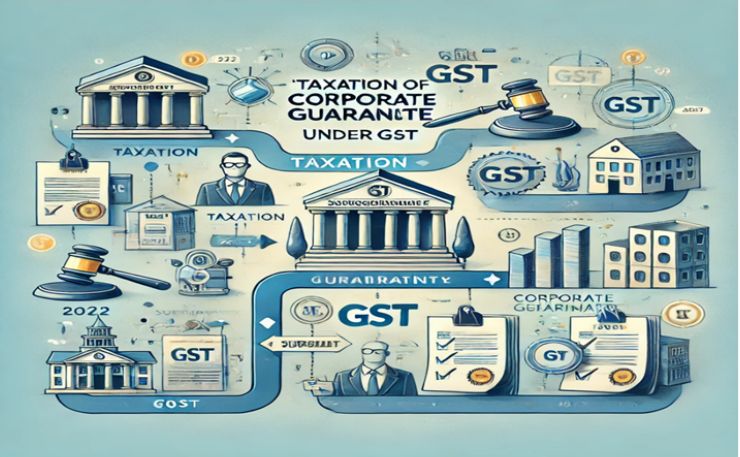
  • Understanding the Corporate Guarantee: A Timeline of Key Developments

    Understanding the Corporate Guarantee: A Timeline of Key Developments

    Table of Contents

    A corporate guarantee is a financial commitment made by a parent company or a financially strong entity within a corporate group to ensure that the obligations of a subsidiary or a related party are met. This guarantee provides assurance to lenders, typically banks or financial institutions, that the guarantor will fulfil the repayment obligations if the borrower defaults on the loan. As such, corporate guarantees play a crucial role in facilitating loans or credit under more favourable terms for the borrower. Over time, the taxation of corporate guarantees, especially under the Goods and Services Tax (GST) regime in India, has undergone significant changes. This essay delves into the understanding of corporate guarantees and traces the timeline of key developments that have shaped their taxation under GST.

    Introduction to Corporate Guarantee

    A corporate guarantee serves as a form of security for lenders, enabling borrowers to secure loans more easily and on better terms. For example, if Company A, the holding company, provides a corporate guarantee for its subsidiary, Company B, it essentially assures the lender that the loan given to Company B will be repaid by Company A if Company B fails to do so. The main objectives of such guarantees include making loans more accessible, transferring the guarantor’s credit rating to the borrower, securing beneficial loan terms, and reducing interest rates.

    In practice, corporate guarantees between related parties, such as within a group of companies, are often provided without any direct monetary consideration. This practice has raised questions regarding the taxability of such guarantees under different tax regimes, including the now-defunct Service Tax and the current GST regime.


    Timeline of Key Developments

    The taxation of corporate guarantees has evolved significantly, particularly under GST. The timeline of key events that have shaped this evolution is as follows:

    February 2022: Supreme Court Ruling on Edelweiss Financial Services Ltd.

    In February 2022, the Hon’ble Supreme Court delivered a landmark judgment in the case of Edelweiss Financial Services Ltd., which dealt with the taxability of corporate guarantees under the Service Tax regime. The court dismissed the appeal by the Revenue, which argued that corporate guarantees provided by a taxpayer to group companies without consideration should be considered a taxable service. The Supreme Court held that, under the Service Tax regime, the issuance of a corporate guarantee without consideration did not constitute a taxable service. This judgment set a significant precedent, influencing the approach to corporate guarantees under GST.

    2023: Introduction of Rule 28(2) under GST

    The GST regime, which came into effect in 2017, brought with it new challenges and opportunities for the taxation of services, including corporate guarantees. In 2023, a major development occurred with the introduction of Rule 28(2) under the CGST Rules. This rule, effective from 26th October 2023, was introduced via Notification №52/2023 — Central Tax, followed by Circular №204/16/2023-GST. Rule 28(2) provided a specific mechanism for determining the value of corporate guarantees provided between related parties. According to this rule, the value of a corporate guarantee was deemed to be 1% of the amount guaranteed or the actual consideration received, whichever was higher. This marked a significant shift in the approach to taxing corporate guarantees under GST.

    2024: Amendments and Clarifications

    The year 2024 saw further refinements to the taxation of corporate guarantees under GST. On 10th July 2024, Notification №12/2024 — Central Tax introduced amendments to Rule 28(2), effective retroactively from 26th October 2023. The amendments clarified that the 1% valuation was to be applied on a per annum basis, and that the rule did not apply to the export of such services. Additionally, the amendments provided that where the recipient of the guarantee is eligible for full input tax credit (ITC), the value declared in the invoice would be deemed to be the value of the service.

    These amendments were accompanied by Circular №225/19/2024-GST, dated 11th July 2024, which addressed several issues regarding the application of Rule 28(2). The circular provided clarifications on various scenarios, such as the taxability of intra-group guarantees, the eligibility for ITC, and the applicability of GST in cases where a corporate guarantee is issued or renewed. The circular also clarified that Rule 28(2) would not apply to the export of corporate guarantee services and provided guidelines on how GST should be applied when multiple guarantors are involved.

    Understanding the Corporate Guarantee under GST

    The introduction of Rule 28(2) and its subsequent amendments have provided a clear framework for the taxation of corporate guarantees under GST. By deeming the value of such guarantees at 1% of the amount guaranteed or the actual consideration, whichever is higher, the GST regime has sought to bring corporate guarantees within the tax net, even when no direct monetary consideration is involved.

    However, this approach has not been without controversy. Several legal challenges have arisen, questioning the fairness and applicability of these rules. For instance, in the case of Sterlite Power Transmission Ltd., the petitioner argued that corporate guarantees should not be considered a taxable service under GST, as they are contingent contracts that do not necessarily involve the provision of a service unless invoked. Similarly, in the case of Acme Cleantech Solutions (P.) Ltd., the petitioner challenged the circular issued by the GST authorities, arguing that it pre-empted the powers of the Assessing Authority.

    These ongoing litigations highlight the complexities and challenges involved in taxing corporate guarantees under GST. Despite these challenges, the government’s intent is clear: corporate guarantees are to be taxed under GST, ensuring that such transactions are not left outside the tax net.


    Conclusion

    The taxation of corporate guarantees has evolved significantly under the GST regime, shaped by key developments over the past few years. From the Supreme Court’s ruling in 2022 to the introduction and amendment of Rule 28(2) in 2023 and 2024, the approach to taxing corporate guarantees has become more structured and defined. While challenges and litigations continue to arise, the framework provided by the GST regime ensures that corporate guarantees are brought within the tax fold, reflecting the government’s intent to create a comprehensive and inclusive tax system. As the legal landscape continues to evolve, it will be important to monitor further developments in this area, particularly as courts and policymakers address the challenges posed by the taxation of corporate guarantees.

  • The Future of Tax Litigation: AI’s Role in Research and Risk

    The Future of Tax Litigation: AI’s Role in Research and Risk

    Table of Contents

    The arrival of Artificial Intelligence (AI) has been nothing short of revolutionary, transforming industries, both streamlining and disrupting the workflows, and challenging traditional methods of problem-solving. For tax professionals and litigators, AI presents both an opportunity and a dilemma. On one hand it promises unprecedented efficiency allowing professionals to navigate complex legal landscapes with ease. On the other hand, it raises concerns about reliability, ethical use, and the potential erosion of human expertise. Some fear AI might replace them, while others see it as a tool that, if used wisely, could enhance the precision and effectiveness of tax compliance and litigation.

    How AI Works and the Role of Large Language Models (LLMs)

    To understand AI’s role in taxation, it is essential to grasp how it functions. At its core, AI relies on vast datasets and advanced algorithms to process information, identify patterns, and generate responses. Large Language Models (LLMs), such as those powering AI chatbots and research tools, are trained on extensive legal, financial, and tax-related datasets. These models work by predicting the next word in a sequence based on previous inputs, allowing them to generate human-like text, summarize legal provisions, and even interpret judicial reasoning.

    The power of LLMs lies in their ability to recognize intricate connections between laws, precedents, and tax regulations. They can analyse thousands of court judgments, extract key arguments, and identify trends in rulings. This pattern recognition is particularly valuable in tax litigation, where past judgments often influence future decisions. By analyzing similarities between cases, AI can suggest relevant precedents that human researchers might overlook, thus providing a more comprehensive legal strategy.

    However, despite their remarkable capabilities, LLMs do not “think” like humans. They do not understand the law in the way a trained professional does. Instead, they rely on probability and pattern-matching, which sometimes leads to errors—most notably, AI “hallucinations,” where the system generates fictitious but seemingly legitimate citations.

    AI Hallucinations: When AI Fabricates Reality

    A major issue with AI-generated legal research is its tendency to hallucinate information. ‘Hallucination’ in AI refers to the phenomenon where an AI model, instead of admitting that it does not have an answer, generates a response that sounds plausible – but is entirely fabricated. This problem arises because LLMs are designed to predict the most statistically probable answer based on their training data, not to verify facts or ensure the authenticity of their outputs.

    Unlike a human researcher who might say, “I don’t know,” or leave a question unanswered when unsure, AI models prioritize coherence over correctness. This means that when an AI model is prompted to provide a legal citation, but no such case exists in its training data, it does not respond with “No such case exists.” Instead, it generates something that looks like a valid case reference—complete with a case name, year, and citation format—that aligns with the query but is entirely fictional.

    The recent case from the Bengaluru bench of the Income Tax Appellate Tribunal (ITAT) illustrates this danger. The tribunal cited three Supreme Court judgments and one Madras High Court ruling that, upon verification, turned out to be non-existent. This error likely resulted from AI-generated research that fabricated case laws to fit the argument being presented. Because the tribunal members and tax department representatives did not cross-check the citations with authoritative sources, the fabricated cases made their way into an official ruling before being withdrawn. These fake cases were generated by ChatGPT and presented as real precedents. The deception was exposed when the opposing party, Avianca, found that the cited cases did not exist in any legal database. Even after being given multiple opportunities to correct their mistake, the attorneys stood by the false citations until the court issued a stern order requiring them to produce the original case texts. This resulted in a sanctions order against the attorneys for failing to verify AI-generated case laws, constituting bad faith and an abuse of the legal system.

    Mata v. Avianca: A Stark Warning on AI Misuse

    A similar incident occurred in the Mata v. Avianca case, decided by the United States District Court, S.D. New York, in June 2023. In this case, attorneys from the law firm Levidow, Levidow & Oberman P.C. submitted a legal brief citing non-existent judicial opinions with fake quotes and citations. These fabricated cases were generated by ChatGPT, an AI tool, and presented as real precedents.

    The deception was exposed when the opposing party, Avianca, noted that the cited cases could not be found in any official legal database. The court itself attempted to verify the cases and found no record of them. Even when given multiple opportunities to correct the mistake, the attorneys involved continued to stand by the fake opinions until the court issued a stern order requiring them to provide the original case texts. This led to a sanctions order against the attorneys, with the court ruling that their failure to verify AI-generated case laws constituted bad faith and an abuse of the legal system.

    India’s AI Model and the Need for AI-Trained Legal Databases

    India is taking a significant step toward building its own indigenous AI model, as announced by the Ministry of Electronics & Information Technology. While the Indian AI model is currently set to train on repositories of public media like Prasar Bharati (Doordarshan & All India Radio), there is a strong case for extending its scope to Indian laws and judicial pronouncements. Training AI models on a structured database of Supreme Court and High Court judgments, ITAT rulings, and statutory amendments would:

    • Prevent hallucinations by restricting AI outputs to verified legal sources.
    • Enhance legal accuracy by ensuring AI tools reflect real-world precedents.
    • Enable faster and more reliable legal research tailored for Indian tax litigation.

    By leveraging India’s high-end compute infrastructure and integrating AI safety mechanisms such as algorithm auditing, bias mitigation, and privacy frameworks, the country can pioneer an AI-driven legal research ecosystem that significantly reduces errors and enhances trust in AI-generated insights.

    The Road Ahead for Tax Professionals: AI Will Not Take Your Job, But a Person Who Knows AI Will

    The increasing role of AI in tax research and litigation means that professionals must adapt to technological changes while ensuring responsible usage. AI will not replace tax professionals, but those who fail to embrace it risk being left behind by colleagues and competitors who leverage AI to enhance efficiency and accuracy.

    What Tax Professionals Should Do

    • Cross-Verify AI Findings: Always verify AI-generated case laws against official legal databases before citing them in litigation.
    • Learn Prompt Engineering: Knowing how to craft precise queries will improve the accuracy of AI-generated research.
    • Stay Updated with AI Developments: Attend workshops and training sessions on AI applications in taxation and litigation.
    • Use AI as an Assistant, Not an Authority: AI should support human judgment, not replace it. Always interpret AI insights critically.
    • Advocate for AI Regulations in Legal Research: Push for industry-wide standards to ensure AI-generated legal research is reliable and accountable.

    What Tax Professionals Should Avoid

    • Never Blindly Trust AI-Generated Case Laws: AI hallucinations can create fictitious citations that lead to legal and reputational risks.
    • Avoid Relying on Generic AI Models: Use AI tools that are specifically trained on tax laws and judicial pronouncements, rather than general chatbots.
    • Do Not Overlook AI Bias: Ensure AI-generated legal research provides a balanced perspective, rather than favouring either tax authorities or taxpayers.
    • Don’t Ignore AI Ethics: Professionals should advocate for ethical AI practices and ensure that AI-driven tax analysis is transparent and explainable.

    Conclusion

    The Mata v. Avianca case, like the Bangalore ITAT case in India, underscores the dangers of unverified AI-generated legal research. AI holds great promise in revolutionizing tax litigation and compliance, but unchecked reliance can lead to serious errors and professional liabilities.

    The future tax professional must embrace AI while maintaining rigorous verification processes. By learning skills like prompt engineering, staying updated on AI safety measures, and using verified AI-driven legal databases, tax professionals can maximize AI’s benefits while safeguarding against its risks.

    AI will not take your job, but a person who knows AI definitely will. With the right safeguards, training, and responsible use, AI will become a powerful ally rather than a disruptive force—helping tax professionals navigate the future with confidence and competence.